In November 1986, after weeks of negotiations, IRI — the state holding company that owned Alfa Romeo — made its decision. Alfa would not go to Ford. Alfa would go to FIAT.
Ford was practically at the finish line of the talks. FIAT’s Ghidella knew it, and pushed hard. On 6 November 1986 IRI announced that it had chosen FIAT, and a day later the decision was ratified by the Italian government.
« «Andai nell’ufficio di Prodi all’Iri e mi lamentai pesantemente. Non sapeva più dove girarsi.» I went to Prodi’s office at IRI and complained bitterly. He no longer knew which way to turn.
— Cesare Romiti, interview with “Corriere della Sera”, 2013 A few years later Cesare Romiti, FIAT’s vice-chairman and one of the men behind the Alfa Romeo takeover, described those events in an interview with “Corriere della Sera”. He recalled going to Prodi’s office at IRI and “complaining bitterly”. Prodi “no longer knew which way to turn”.
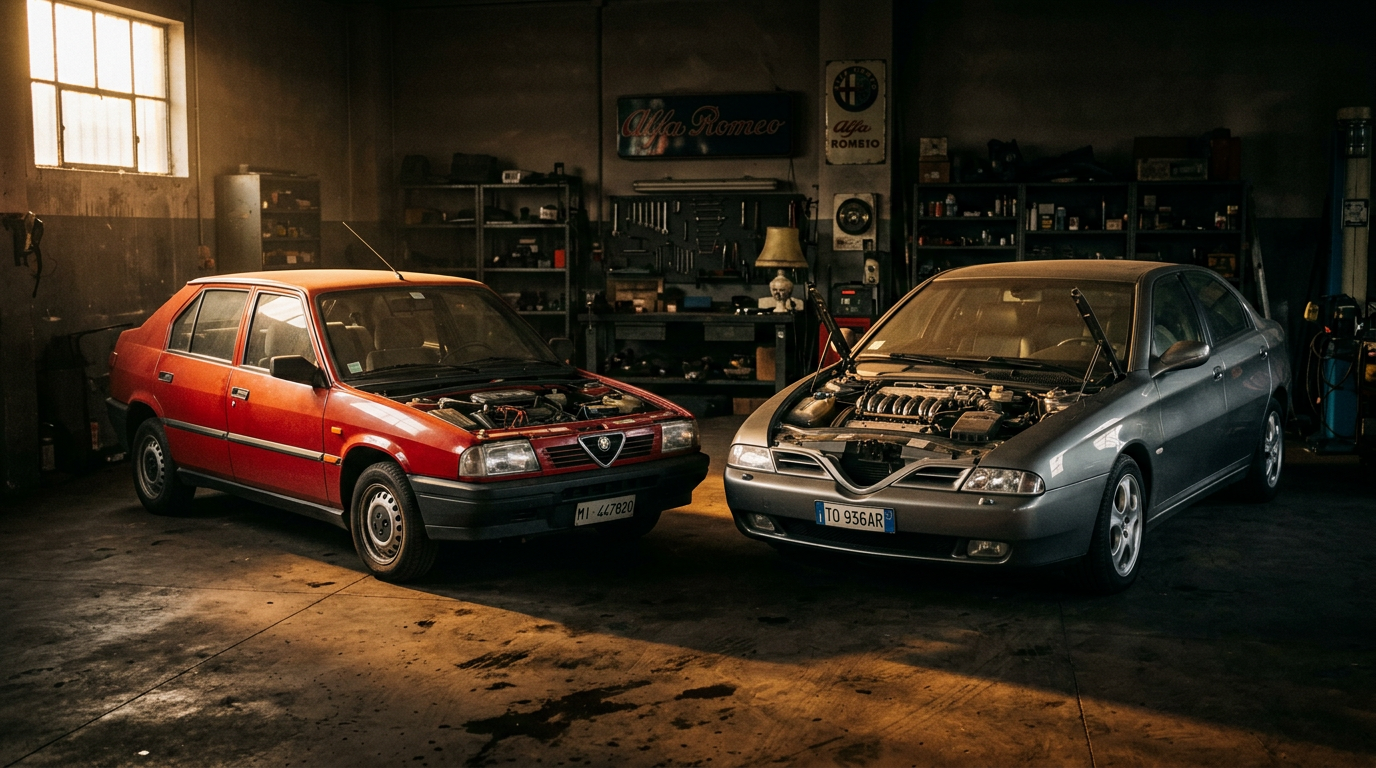
And this is the moment where the whole story told on this site begins. Because both of these Alfas — the 1994 33 Imola and the Busso-powered 166 — exist because in 1986 FIAT beat Ford.
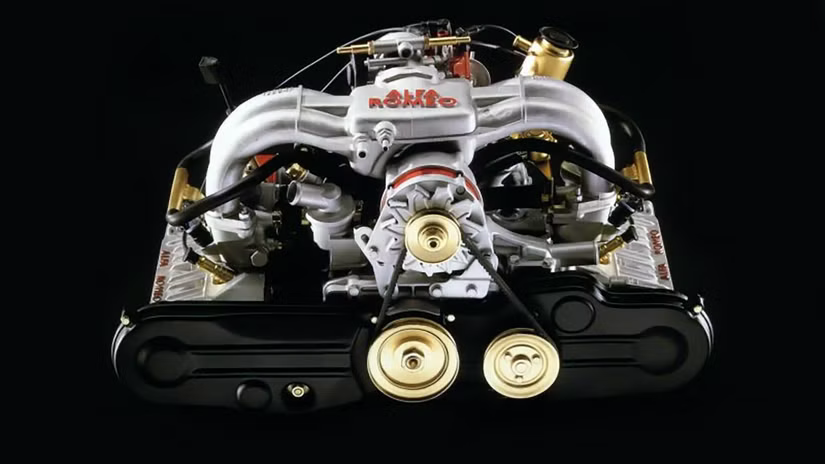
The 33 comes from the state era — it debuted in 1983 — but its later production already ran under FIAT control. The 166 is a fully FIAT-era Alfa. Even the engines I write about on this site — the 1989 16-valve evolution of the boxer and the development of the Busso V6 through to 2004 — were part of investment decisions already made within the FIAT group.
But this is the paradox of salvezza: FIAT saved Alfa and slowly killed what made it Alfa, at the same time.
Without FIAT, Alfa would probably have disappeared at the end of the 1980s. With FIAT it survived, but gradually lost its own manufacturing base. Car production at Arese ended in 2000, Busso V6 production in 2004, and the in-house boxer family finally disappeared in 1997.
And then — after the creation of FCA in 2014 and the merger of FCA with Groupe PSA in January 2021 that gave rise to Stellantis — Alfa Romeo found itself inside an even larger industrial structure.
Today’s Alfa Romeo Junior uses the CMP platform shared with, among others, the Peugeot 2008 and the Opel Mokka.
The brand is still alive. But the question is: for how long?
The cars in this garage belong to the last era in which Alfa Romeo was still only itself.