The Violin from Arese — How Giuseppe Busso Created the Soul of Alfa Romeo, and Why Its Silence Still Hurts
Souls and Hearts of Alfa Romeo — Part I
By Admin
Cuore Sportivo — "Souls and Hearts of Alfa Romeo" series, Part I
For every Alfista there is an invisible line dividing the era of mechanical purity from the age of industrial pragmatism. The axis of this generational split is a six-cylinder engine: on one side the legendary Busso V6, on the other the 3.2 V6 JTS that powered the Alfa Romeo 159. It was a painful handover of the baton, in which the "Violin of Arese" fell silent, giving way to the global realities of the automotive industry.
Two different sets of DNA
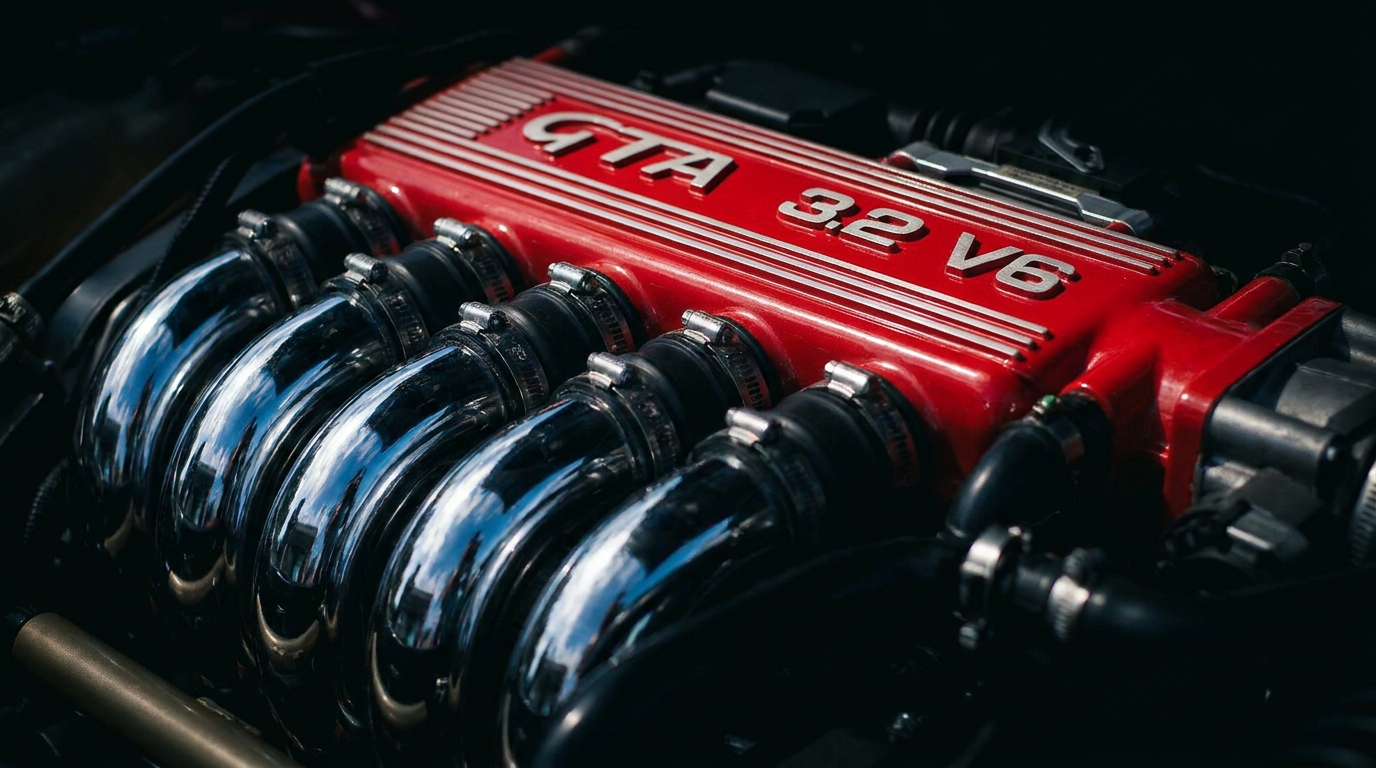
The differences begin in the very DNA of the two units. Designed in the 1970s by engineer Giuseppe Busso, the engine that bears his name was born in Arese. In its final evolution — 3.2 litres and 250 hp (used in the 147 GTA, 156 GTA and GT, among others) — it represented the apogee of the Italian school of engine design: emotional, light and extraordinarily responsive.
The 3.2 JTS in the 159, by contrast, was the fruit of the ill-fated Fiat–General Motors alliance of the early 2000s. Its engine block came from the GM High Feature family — an aluminium design created across the ocean to power heavy SUVs and saloons for Holden, Cadillac and Chevrolet.
Character on the road
That different genetic make-up translated into completely different characters on the road. The Busso design, built around the ideal 60° cylinder bank angle, delivered superb natural balance. At low revs it was calm, but above 4,000 rpm it turned into a true beast.
In the case of the Alfa 159, the engineers at the Biscione worked something close to a miracle, redesigning the cylinder heads and introducing direct fuel injection together with the Twin Phaser variable valve timing system. Even so, the unit's American roots remained clearly perceptible. The JTS proved to be a calmer engine, offering high torque at low revs and excelling on long journeys, but less eager to spin up to high revs and noticeably heavier in character.
The senses: a metallic scream versus a muffled whisper
The sensory experience opened an even wider gulf. The engine bay of the GTA was a true temple of motoring, dominated by six polished, chrome intake runners. The result was a sharp, metallic scream — a sound unrepeatable anywhere in the automotive world.
The 3.2 JTS in the 159, by contrast, was hidden beneath a grey plastic cover and further muffled by the requirements of the Euro 4 standard. The result was a far more subdued, deep tone.
Two philosophies of servicing
In terms of maintenance, too, the two engines embodied opposing philosophies. The Busso required regular replacement of its delicate timing belt. The JTS promised peace of mind thanks to a timing chain — yet in the first series of GM units the chain was prone to premature stretching, leading to costly failures.
Its only sin: it had to replace a legend
The 3.2 V6 JTS was not a bad engine. It was a solid powertrain for a heavy saloon. Its only sin was that it had to replace a legend.
The Busso was the last engine of Alfa Romeo's romantic era — an era that no cost optimisation and no economy of scale could ever recreate. Only many years later was that baton of pure passion picked up again by the V6 Biturbo of the Quadrifoglio, writing a new chapter of the story hand in hand with the engineers from Maranello.
Next in the series: The Return of Royal Blood — how the Giulia Quadrifoglio V6 avenged the Busso.
About this article
The Busso V6 versus the American-rooted 3.2 JTS of the Alfa 159 — why Italy's most soulful engine fell silent, and what we really lost.